
A glimpse of medieval history at Exeter Cathedral
I recently had a wonderful opportunity to explore a room in Exeter Cathedral I had not seen before when I joined a tour with the Devon Buildings Group and Cathedral Archaeologist, John Allan.
Exeter Cathedral is one of Europe’s great cathedrals, a magnificent example of medieval architecture from the 12th to 14th centuries. I’ve visited the cathedral many times, and stood in awe wondering at the towering vaulted ceiling and magnificent stained glass. I’ve searched for the tomb effigies of people from my research and wandered through the many chapels. I'd never climbed the tight, winding stone staircase to the room above the chapel of St. Andrew and St. Catherine in Exeter Cathedral before. The sight that awaited me was nothing short of amazing. Stunningly well-preserved medieval tiles completely cover the entire floor.
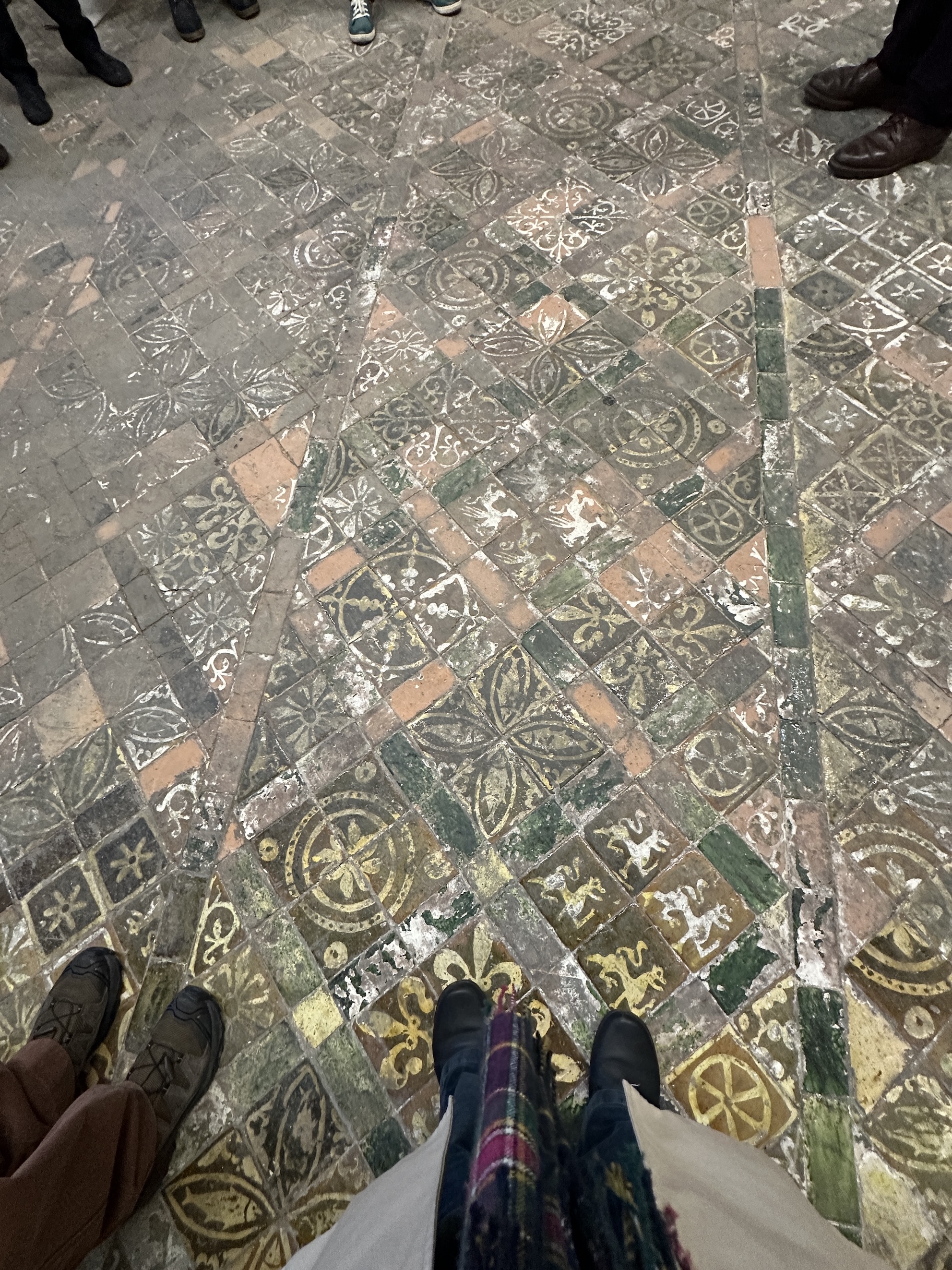
Recent work to install a new roof for the chapel has provided an opportunity to uncover this extensive pavement of medieval floor tiles. There were references to the floor in the cathedral’s own records and in the archives, but no one had ever seen it. It is believed to be the finest medieval tile pavement surviving in Devon and Cornwall.
Decorated floor-tiles originally paved many parts of the medieval cathedral. However, most of the pavements formerly in the body of the church are now lost, but this floor, thought to date from the late 13th century, has survived intact. Another decorative floor survived until the 20th century, in the Chapel of St James, but it was destroyed in the Exeter Blitz.
Items of furniture had covered some parts of the floor, and in those areas protected from the passage of countless feet, the glazing of the tiles is still intact. The colours look as they did when the tiles were first laid. It gives an impression of the vibrant colours visitors to the cathedral would have seen when the floor was new
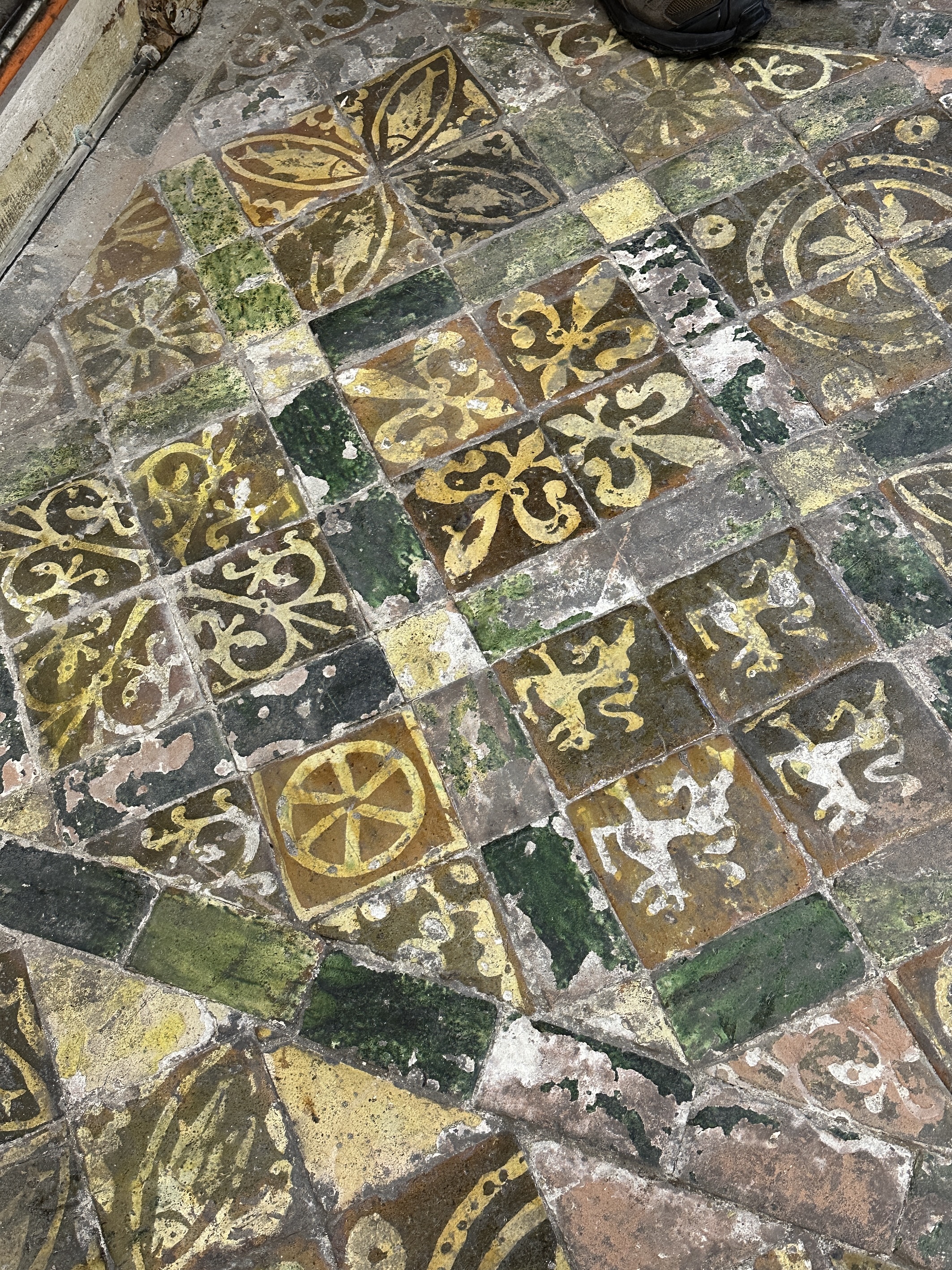
Intricate patterns decorate the tiles — geometric designs, heraldic beasts, and coats of arms. These patterns wer made by impressing a wooden stamp in the red clay body of the tile, then infilling the impression with white clay. Elsewhere, even as far away as Salisbury, tiles feature similar designs. Medieval craftsmen must have transported either the tiles or the stamps for making them to Exeter.
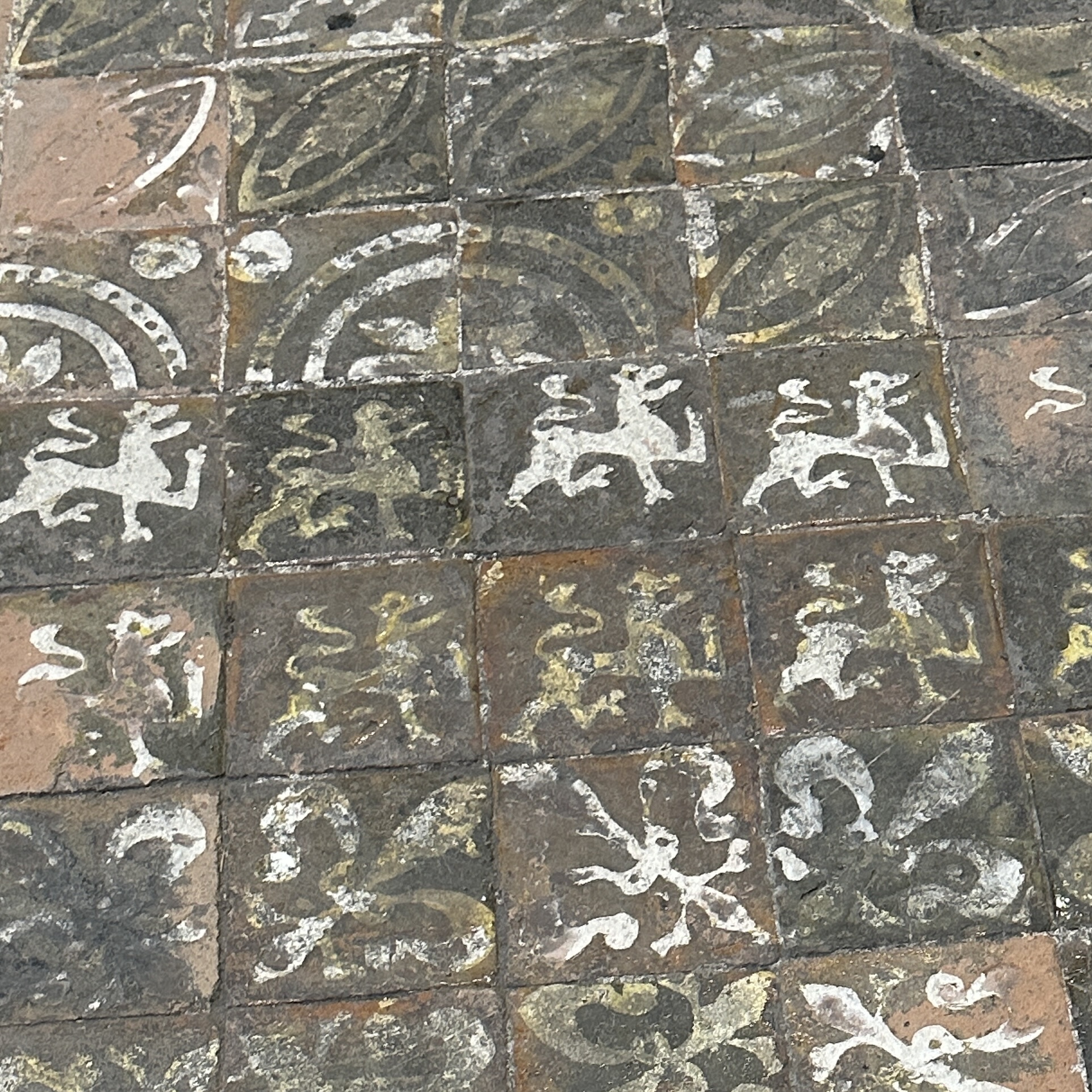
The room served as the Song School for boy choristers in the 20th century. However, in the Middle Ages, it was the cathedral’s exchequer.
Today, the name “exchequer” lives on in the title of the government minister who heads the Treasury: the Chancellor of the Exchequer. This minister is responsible for the country’s financial policies. The term originated from the chequered cloth, much like a chessboard, spread across a large table. Officials used this cloth, along with counters, to keep track of rent payments. This simple system aided accounting, especially in an era when many people, including sheriffs and tenants, could not read or write. As well as the royal exchequer, large monasteries and cathedrals each had their own exchequer.
An article published on the National Archives history blog gives more detail The Exchequer: a chequered history? – History of government
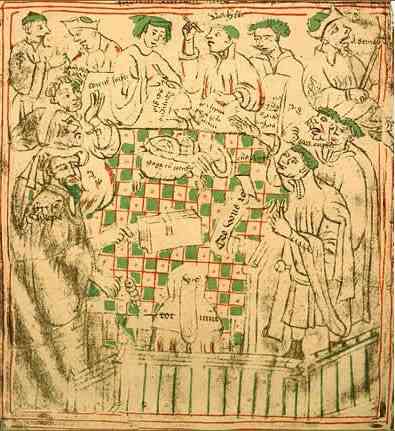
Image sourced via Wikimedia Commons.Exchequer of Ireland (Facsimiles of Irish Manuscripts, volume III, plate xxxvii.)
The exchequer chamber above the chapel was the financial, administrative centre of Exeter Cathedral. Tenants of Cathedral properties came here to pay their rents. There is a stone bench in the chapel below where they may have sat while waiting to be called.
The remarkable floor is not the only reminder of this room’s former role. Wonderful carved stone heads also stare from the walls. Some of them are rather scary. Perhaps the bishop instructed the medieval builders to put them there to frighten those who might have thought of paying less than was due.
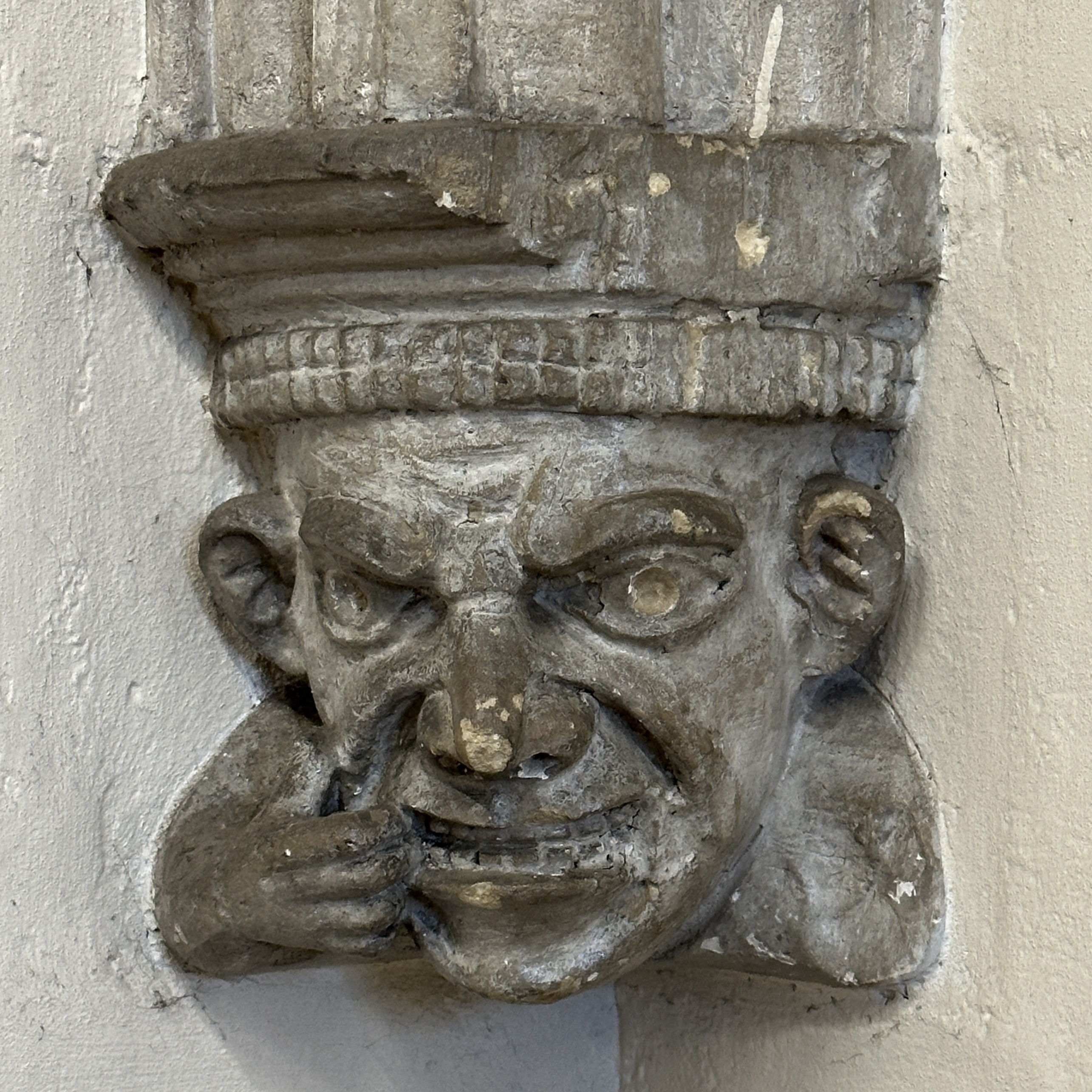
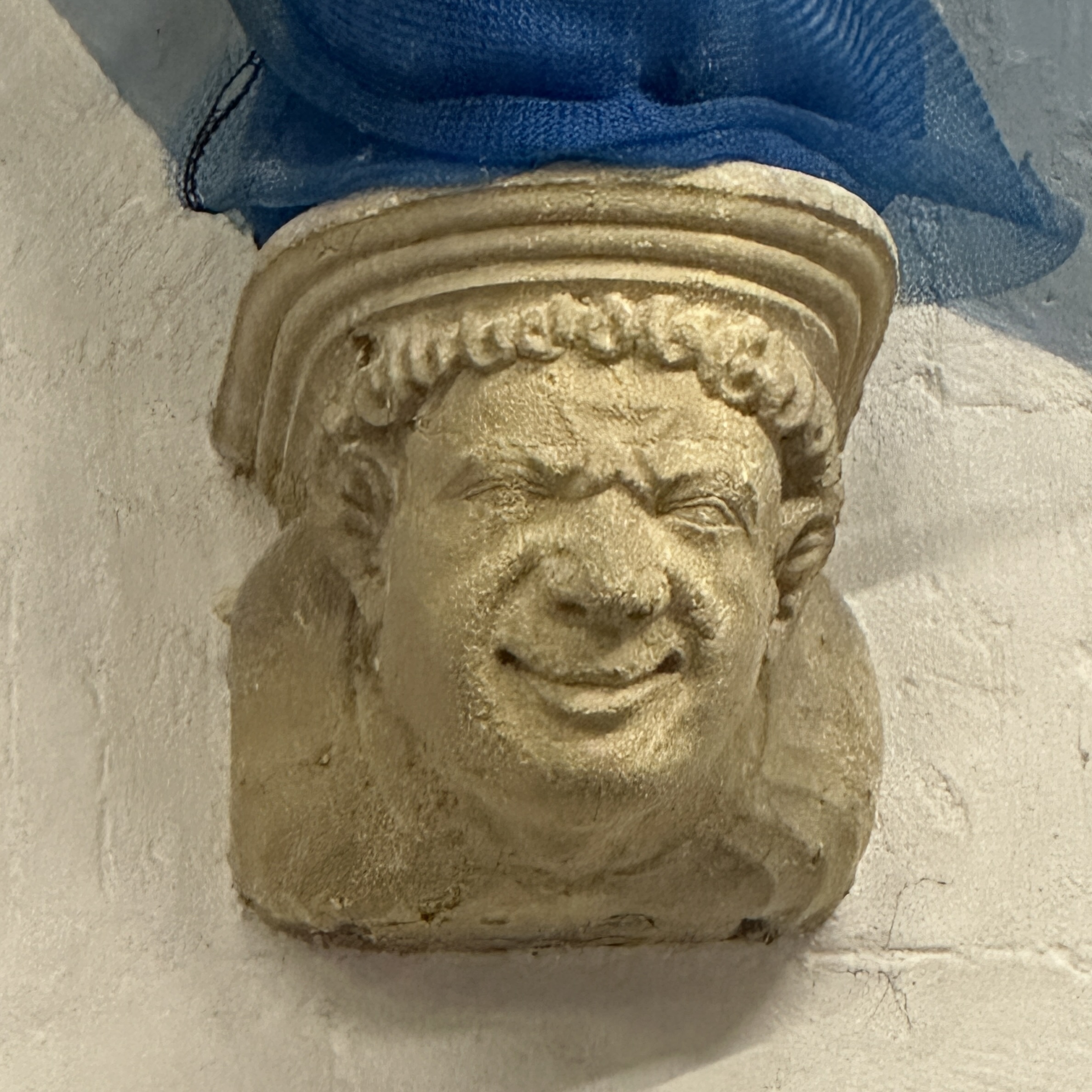
Another carving depicting a pig and piglets gave me pause for thought. Why here?
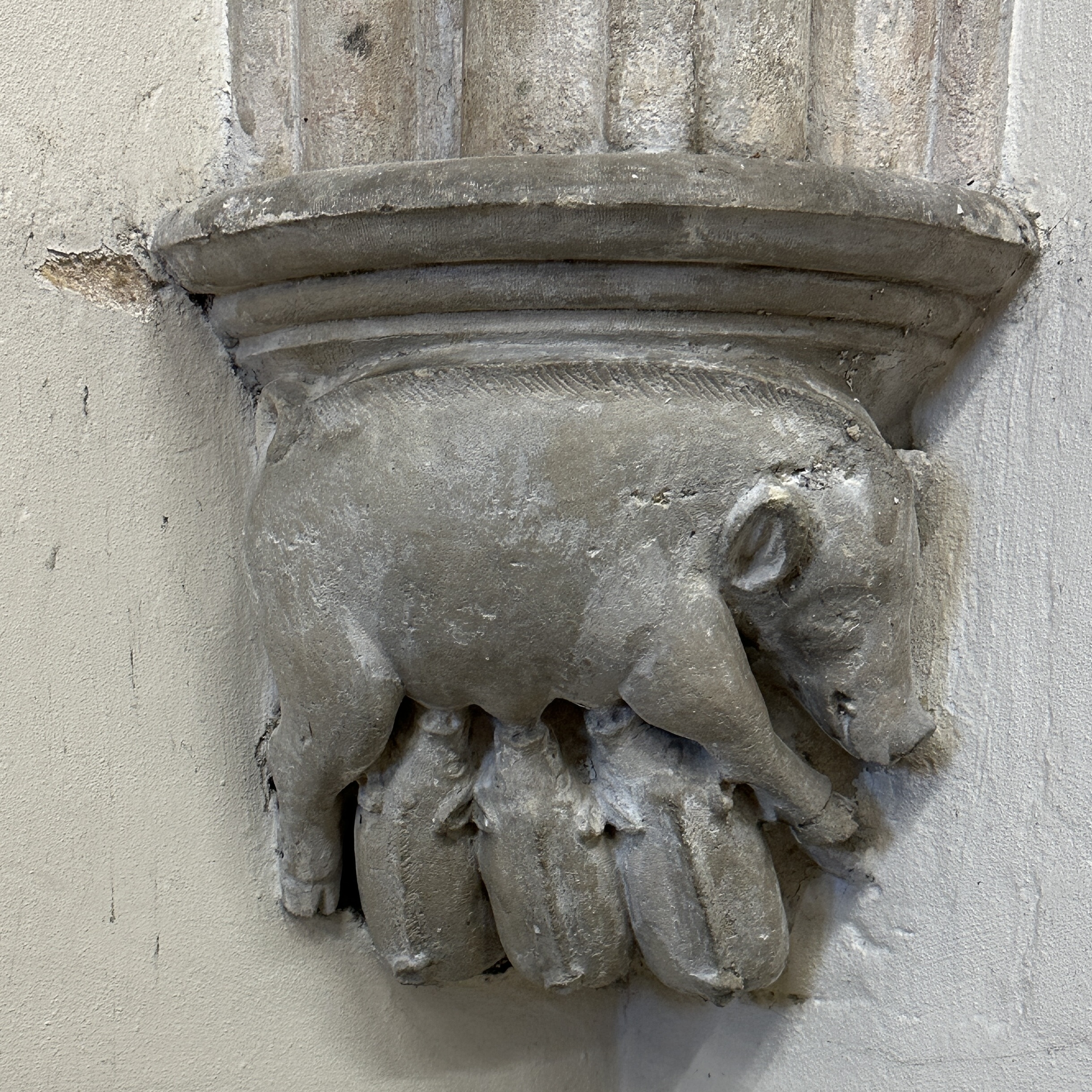
The pig was a precious animal in medieval times. Pigs produce large litters of young, and people may have regarded them as a symbol of fertility and abundance, leading to an association with financial success. The “piggy bank” is perhaps a modern-day survival of that association. Given that it portrays a sow and piglets, the charming carving in the exchequer groom probably aimed to remind people of the more positive view, which saw pigs as symbols of prudent money management.
Alternatively, in this room, the pig and piglets might have another, more negative connotation. Because of their voracious appetites and habit of wallowing in mud, people also used pigs as examples of laziness, uncleanliness, and greed. This led to pigs being depicted in medieval churches as reminders of the sins of gluttony and greed. Images of pigs survive on carved roof bosses in some Devon churches, for example, at Sampford Courtenay, Ugborough and Braunton, and on stone pillars like this one at St Mary’s Church, Wolborough, near Newton Abbot showing a pig foraging amongst acorns and oak leaves.
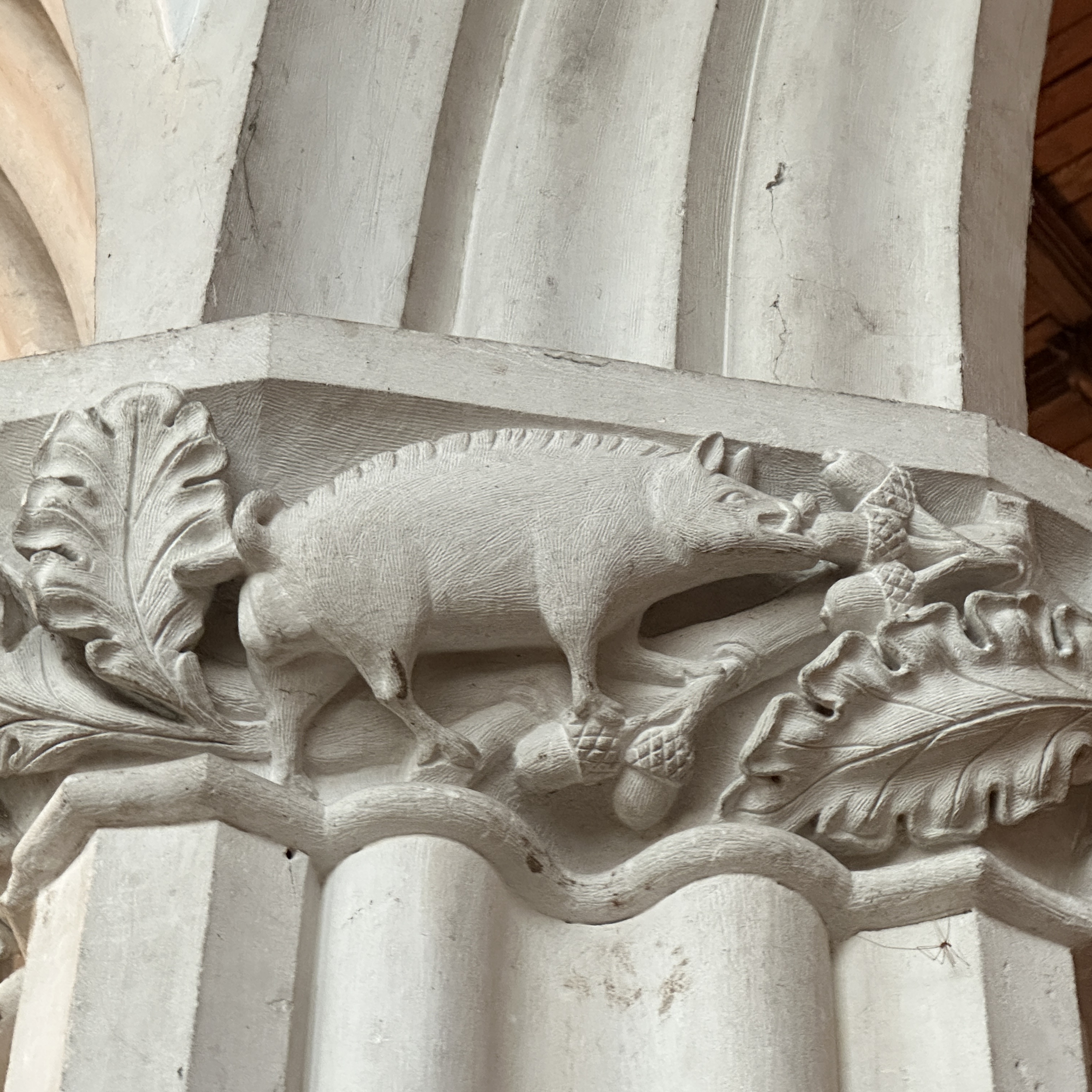
Medieval churchgoers would have understood the meaning of this sort of imagery if they glanced up during the service. Few people could read or write, so painted walls, stained glass and carvings created by skilled artisans served as a colourful ‘picture book’ to reinforce the tenets of the Christian faith. Those entering the Exchequer Chamber to pay their dues would no doubt have understood the reminders on the walls.
I feel incredibly privileged to have seen this room. What stories we could weave about what went on here!
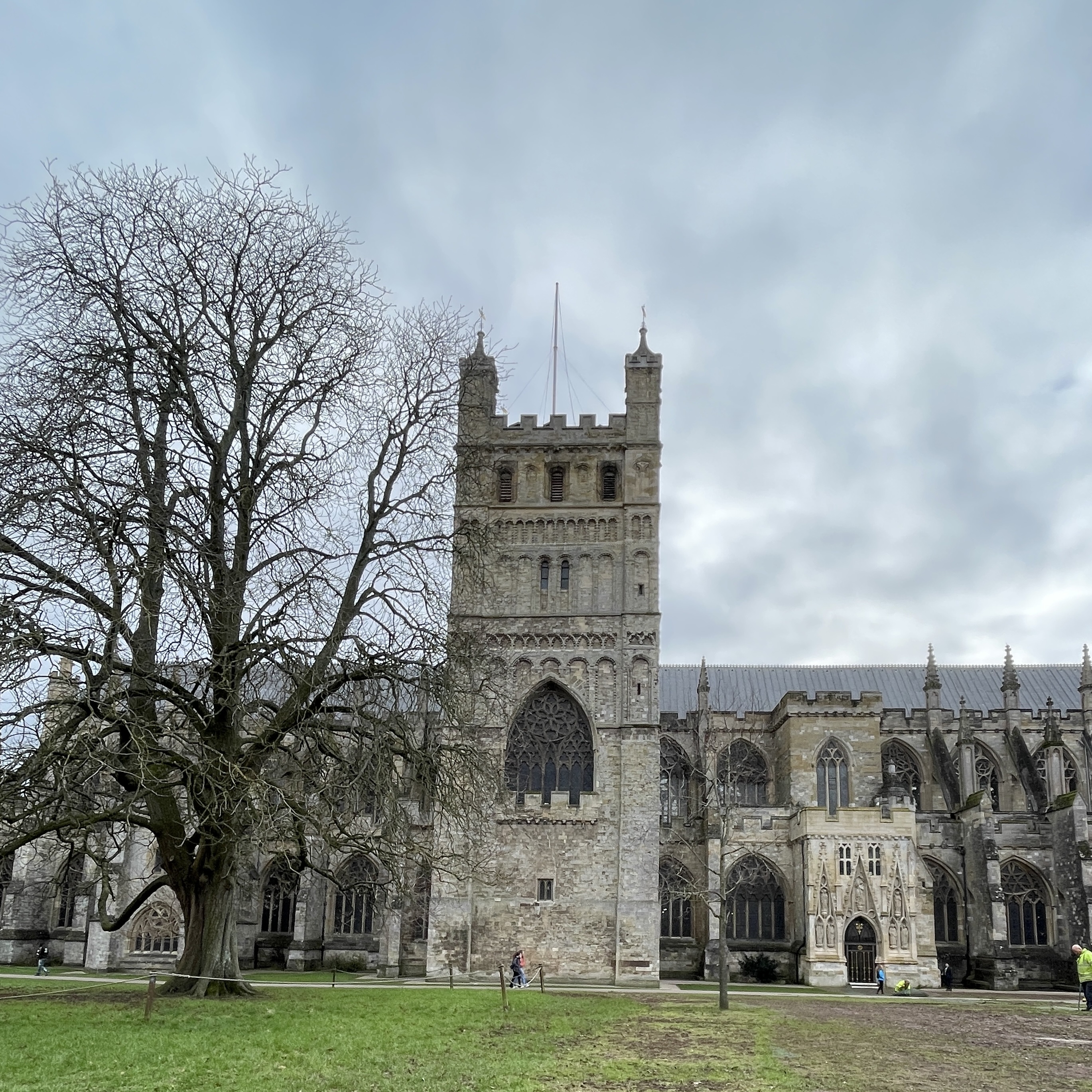
At the time of my visit in November 2025, work is continuing on a major development in for the Cathedral.focusing on conservation, improved visitor experience, and sustainability. I believe plans to open the Exchequer Tower to the public at a later date are under discussion. Visit the cathedral website for details of opening times and tours.
https://www.exeter-cathedral.org.uk/
The Devon Buildings Group was established in 1986. Its aim is to encourage awareness of all aspects of the wealth of historic buildings in Devon and to take an active part in their preservation. Membership is open to anyone interested in Devon’s historic buildings, villages and towns. Visit their website to find out more
https://www.devonbuildingsgroup.org.uk/